How Often Should You Clean an Oriental Rug?
The short answer: most hand-knotted Persian and Oriental rugs benefit from professional cleaning every 12 to 24 months. But if you've searched this question before, you've probably seen everything from "every 6 months" to "every 5 years" — and both can be correct, for different rugs. This guide explains why the range is so wide, and how to work out where your rug actually sits within it.
Why Every Source Seems to Give a Different Answer
Search this question and you'll find genuinely conflicting advice: some rug retailers say every five years, some cleaning specialists say every six months, and plenty of guides land somewhere in between. This isn't because half of them are wrong. It's because "how often should a Persian rug be cleaned" doesn't have one answer — it has an answer that depends on four things most articles don't bother separating out: foot traffic, fibre type, dye stability, and where the rug actually lives in your home.
A rarely-walked-on Kashan in a formal sitting room and a hallway runner in a home with two dogs are both "Persian rugs," and treating them the same way is exactly the kind of generic advice that leads to either wasted cleaning or, more commonly, rugs left far too long between cleans.
The Mechanism: Why Rugs Need Cleaning Before They Look Dirty
The single most important thing to understand about hand-knotted rug maintenance is this: a rug that looks clean can already be wearing itself out from the inside.
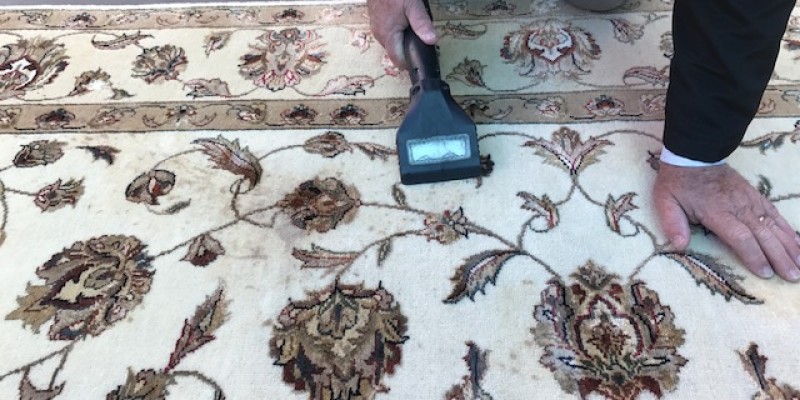
Household dust isn't soft. It's a mixture of mineral grit, sand, skin cells and fine soil, much of it with genuinely sharp, irregular edges under magnification. When this grit settles into a rug's pile, it doesn't stay on the surface — it works down through the fibres toward the foundation, helped along every time someone walks across the rug.
Once embedded, that grit behaves like fine sandpaper trapped inside the weave. Every footstep grinds it against the wool, silk or cotton fibres from within. This is a slow, invisible process. A rug can look presentable for years while this abrasion steadily thins the pile, dulls the colour, and weakens the knots holding the whole structure together.
Expert tip: darker, densely patterned rugs hide this process particularly well. A pale, plain-weave rug will show soiling early and prompt cleaning on its own. A richly patterned Persian rug in deep reds and navy can be genuinely full of embedded grit while still looking presentable from across the room — which is exactly why appearance is an unreliable guide for these rugs specifically.
The Four Variables That Actually Determine Your Rug's Schedule
1. Foot traffic and location
An entryway or hallway rug accumulates grit dramatically faster than a rug in a rarely-used formal room. This is the single biggest driver of cleaning frequency, and it's why a blanket "every X years" answer is almost always wrong for at least some of the rugs in a home.
2. Fibre type
Wool hides soil well and tolerates a longer interval between cleans; it's also more forgiving of the cleaning process itself. Silk and viscose show soiling differently, are far more sensitive to moisture, and generally need more conservative handling even if they're cleaned less frequently in raw time terms.
3. Dye stability
Older rugs, rugs with natural or vegetable dyes, and rugs from regions historically associated with less colourfast dyes need more caution at each clean, which can mean less frequent but more careful professional attention rather than more frequent cleaning.
4. Household factors
Pets, children, bare feet versus outdoor shoes, and Sydney's own coastal humidity and dust conditions all shift the safe interval. A rug that would comfortably go 24 months in a dry, adult-only household may need attention closer to the 12-month mark elsewhere.
Expert tip: if you can only remember one rule, remember this: a rug's condition, not its calendar age or its appearance, is what should set the cleaning schedule. Two identical rugs bought on the same day, in two different homes, can need completely different intervals within a year of each other.
Persian vs Oriental: Does the Distinction Matter for Timing?
"Oriental rug" is the broader category — it covers hand-knotted rugs from across Asia, including Persian (Iranian), Turkish, Caucasian, Indian and Chinese weaving traditions. All genuine Persian rugs are Oriental rugs, but not all Oriental rugs are Persian.
For cleaning frequency specifically, the distinction that actually matters isn't the country of origin, it's construction and fibre: a robust wool Persian Kashan and a robust wool Turkish Konya rug follow very similar maintenance logic, while a fine silk Persian Isfahan and a fine silk Turkish Hereke share more in common with each other than either does with a coarser village wool piece from their own country.
If you want the construction-level detail for your specific rug type, see our dedicated guides to Persian rug cleaning, wool rug cleaning, and Turkish rug cleaning.
A Realistic Schedule by Rug Type and Situation
| Rug and situation |
Typical interval |
| Wool Persian/Oriental rug, low-traffic formal room |
18–24 months |
| Wool Persian/Oriental rug, everyday living space |
12–18 months |
| Wool Persian/Oriental rug, hallway or entryway |
6–12 months |
| Household with pets or young children |
6–12 months, regardless of location |
| Silk or part-silk Persian/Oriental rug |
18–24 months, with more conservative low-moisture cleaning |
| Antique rug (50+ years) with any wear or fringe concerns |
Assessment-led, not calendar-led — ask a specialist |
These figures are a starting point, not a substitute for inspection. They're deliberately similar to the ranges given in our broader how often should rugs be cleaned guide, because the physics of soil, fibre and traffic don't change by rug type — what changes for Persian and Oriental rugs specifically is how much more that soil can cost you if it's left too long, given the value and construction of the rug involved.
Signs Your Persian or Oriental Rug Needs Attention Sooner Than Scheduled
- A gritty or sandy texture when you run a hand flat across the pile
- Colour that looks slightly duller in traffic lanes than at the edges
- A musty smell that's stronger on humid days
- Fringe that's darkened, yellowed or feels stiff
- Any pet accident, however quickly it was cleaned up at the time
Any of these point to contamination that's already reached the foundation, not just the surface — which is a different, more urgent situation than routine scheduled maintenance. See our guide on pet urine and odour removal if that applies to your rug.
Why We Don't Just Give You a Number Over the Phone
Every Persian and Oriental rug that comes through our Sydney facility is assessed individually — construction, wool or silk content, dye stability, fringe condition and current soiling level — before we recommend a schedule, not after. This is the same inspection-led approach behind our Persian rug cleaning process: dye testing and fibre identification always come before any moisture is applied, because the safest interval and the safest method are decided by the same inspection, not two separate conversations.
We are a WoolSafe Approved Service Provider with IICRC-certified technicians, and senior technician Lachlan Bennett has personally assessed thousands of Persian and Oriental rugs across Sydney homes, which is why our advice is based on what we actually see in rugs brought in for cleaning, rather than a single generic figure.
You can read more about WoolSafe's independent testing standards at The WoolSafe Organisation.
Between Cleans: What Actually Helps
- Vacuum with suction only where possible, avoiding a beater bar directly on fringe
- Vacuum the reverse side every month or two to loosen embedded grit from underneath
- Blot fresh spills immediately, working inward from the edge of the mark, never scrubbing
- Rotate the rug periodically if it sits in direct sunlight, to even out UV fading
- Avoid placing potted plants directly on the rug, since trapped moisture underneath can lead to mould
None of this replaces professional cleaning. It simply slows how quickly embedded soil accumulates between visits.
Frequently Asked Questions
How often should a Persian rug really be cleaned?
Most wool Persian rugs in everyday use benefit from professional cleaning every 12 to 18 months. Low-traffic rugs can often extend to 18–24 months, while hallway rugs or homes with pets typically need attention every 6 to 12 months.
Why do some sources say Persian rugs only need cleaning every five years?
That advice usually applies to a rarely-walked-on rug in a low-soil environment, and even then it likely underestimates the invisible abrasion happening beneath the surface. It isn't wrong for every rug, but it's a poor default for most.
Is there a difference in cleaning frequency between Persian and other Oriental rugs?
The country of origin matters less than the rug's fibre and construction. A wool Persian rug and a wool Turkish rug of similar quality follow similar schedules; a fine silk rug from either tradition needs the same more cautious approach regardless of origin.
Can I tell if my rug needs cleaning just by looking at it?
Not reliably. Darker, densely patterned Persian and Oriental rugs are particularly good at visually hiding embedded soil that's already causing fibre wear. Texture (a gritty feel underfoot) and smell are more reliable early indicators than colour or visible dirt.
Does an antique Persian rug need cleaning more or less often?
Often less often in raw frequency, but each clean needs to be more carefully assessed. Antique rugs can have weakened foundations, historic repairs or dye sensitivity that make a fixed schedule less useful than an individual inspection each time.
What happens if I leave it too long between cleans?
Embedded grit continues to abrade the pile and foundation the entire time, and any pet urine, spills or mould-related contamination has longer to travel deeper into the rug and become harder to fully treat.
Get an Honest Assessment, Not a Guess
If you're unsure where your Persian or Oriental rug sits on this schedule, the most reliable answer comes from having it looked at rather than estimating from age or appearance.
Call 1300 310 410 for a free assessment and honest advice on your rug's cleaning schedule, or complete the form below.
Oriental Rug Care provides specialist Persian and Oriental rug cleaning in Sydney, with every rug inspected individually before we recommend a method or a schedule.