Kilim vs Persian Rug: What's the Difference?
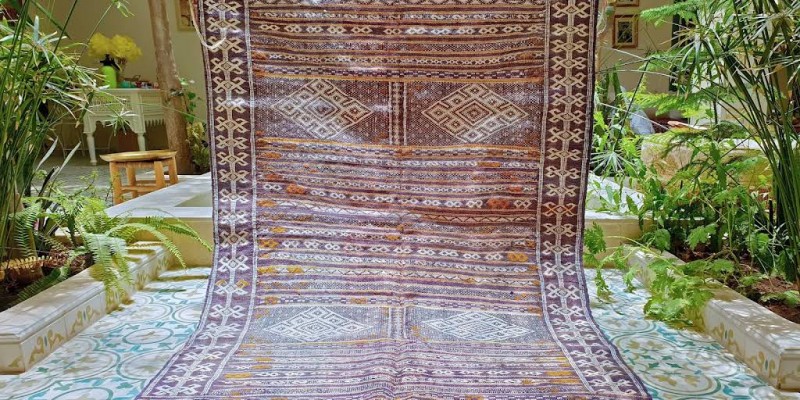
The short answer: a kilim is flatwoven with no pile at all, while a Persian rug is hand-knotted with a raised, tufted surface. Almost every article online stops there and moves on to which one suits your living room. This one doesn't. We clean both types every week in our Sydney facility, and the construction difference between them matters far more for how a rug should be washed, dried and cared for than it does for how it looks in a photo.
Why Most "Kilim vs Persian" Guides Miss the Point That Actually Matters
Search this comparison and you'll find dozens of interior design and rug retail sites explaining pattern style, room suitability and price range. That's useful if you're buying a rug. It's close to useless if you already own one and need to know how to look after it, because none of that content is written by anyone who has actually put either rug type in a wash pit.
We have. This is what we actually notice, rug in hand, that a retail description never mentions.
Construction: The Difference That Decides Everything Else
Kilims are built from weft threads alone
A kilim has no knots and no pile. The pattern is created entirely by coloured weft threads woven over and under the warp, packed down tightly to hide the warp completely. There's nothing standing proud of the surface to trap soil, which is exactly why kilims are often described as "easier to clean" — and why that description is only half true, as we'll get to.
Persian rugs are built from individually tied knots
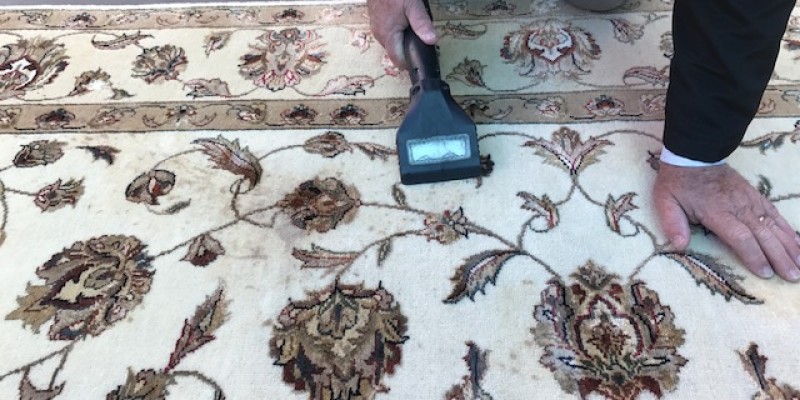
A genuine Persian rug is constructed knot by knot, each one tied around the warp threads and trimmed to a consistent height to form the pile. That pile is what gives a Persian rug its plush feel, its shadow-and-light depth, and its ability to hide soil deep in the weave — which is a very different problem to a kilim's.
Something most guides don't mention: not all kilims are built the same way, and it changes their durability. Slit-weave kilims — common in Turkish and Caucasian weaving — leave a small gap wherever two colour blocks meet, because the weft simply turns back on itself at the colour change. Interlocking-weave kilims, more common in Persian and Kurdish weaving, wrap the two colours' threads around each other at the join instead. Slit-weave kilims are more prone to slit enlargement over time and with washing; interlocking kilims are structurally sturdier at the same points. If you own a slit-weave kilim, this is worth knowing before it goes anywhere near an aggressive wash process.
What This Means Under Water: The Cleaning Difference Nobody Explains
Kilims: less soil, but more exposed structure
Because there's no pile, a kilim genuinely does hold less deeply embedded grit than a knotted rug of the same age and use. But that same flat, exposed weave means every part of the construction — including any slit-weave joins — is directly exposed to water, agitation and drying stress with nothing to cushion it. A kilim that's been aggressively machine-agitated or wrung rather than gently hand-washed can develop or widen slit separations that a pile rug's construction would never reveal in the same way.
Persian rugs: more soil, but a more forgiving structure
A knotted Persian rug hides far more embedded soil, dust and grit within its pile and foundation — which is why full immersion washing matters so much for these rugs specifically. But the knotted structure itself is generally more tolerant of the wash process than a kilim's exposed flatweave, provided the wool and dyes are suitable for it.
Something most guides don't mention: a kilim that's never been professionally washed can look deceptively clean while carrying years of dry soil embedded right at the base of the weave, against the warp. Because there's no pile to visually hide it, people assume "no pile means no hidden dirt" — but the soil is just sitting in a different layer of the same textile, and a light vacuum rarely reaches it.
The Dye Question: Why Kilims Bleed Differently to Persian Rugs
This is the part almost no comparison article gets into properly, and it's one of the most important practical differences between the two.
Traditional dyes, whether used on a kilim or a Persian rug, need to be "fixed" to the fibre with a mordant — a metallic salt solution that binds colour to wool so it doesn't wash out or fade. Well-mordanted dye is stable. Poorly mordanted dye, or dye that was only ever meant to sit on the surface of the fibre rather than bond with it, will bleed when it meets water.
Here's the detail that matters for you as an owner: village and nomadic kilims are statistically more likely to carry naturally variable, hand-mixed dye lots than a workshop-produced Persian city rug, simply because of how and where they were traditionally made. That doesn't mean every kilim is dye-unstable and every Persian rug is safe — plenty of village Persian pieces carry the same variability, and plenty of kilims are perfectly stable. It means neither rug type gets a free pass on dye testing, and treating "it's just a kilim, it'll be fine" as a shortcut is exactly how colour migration happens.
Something most guides don't mention: dye bleed risk on both rug types often gets worse with each home cleaning attempt, not better. Household detergent residue builds up in the fibre over repeated DIY cleans, and by the third or fourth attempt that residue can interact with the dye in ways the original, professionally applied mordant was never designed to withstand. A rug that's been "fine" through two home cleans isn't necessarily safe on the third.
Side-by-Side: What We Actually Check Before Cleaning Either One
| Kilim (flatweave) |
Persian rug (knotted pile) |
| No pile — pattern is woven directly into the fabric |
Raised pile — pattern formed by individually tied, trimmed knots |
| Soil sits at the base of the weave, against the warp |
Soil works down through the pile toward the foundation |
| Slit-weave joins are a structural point to check before washing |
Fringe and foundation knots are the structural point to check |
| Reversible in most cases — check both sides during inspection |
Only the face side is finished; the back reveals knot density and repairs |
| Lighter and easier to handle, but less forgiving of aggressive agitation |
Heavier and bulkier, but the pile structure tolerates washing well once tested |
| Dries faster given the flat construction |
Needs longer, more carefully controlled drying to prevent browning or shrinkage |
Caring for a Kilim Between Professional Cleans
- Vacuum both sides, not just the top — a kilim's reversibility means soil can sit on either face
- Use suction only, no beater bar, particularly along any slit-weave edges
- Shake it out occasionally rather than relying on vacuuming alone; because there's no pile, shaking is genuinely effective on a kilim in a way it isn't on a pile rug
- Never soak a kilim in a bathtub or hose it down at home, however sturdy it feels — dye testing needs to happen first, every time
- Roll a kilim loosely for storage rather than folding it, which can create permanent creases along fold lines over time
Caring for a Persian Rug Between Professional Cleans
- Vacuum with suction only, avoiding a beater bar directly on fringe
- Vacuum the reverse occasionally to loosen grit that's worked down toward the foundation
- Blot spills immediately, working inward from the edge of the mark, never scrubbing into the pile
- Avoid direct, prolonged sunlight, which fades pile colour unevenly compared with the rug's protected edges
- Never attempt a full wash at home — dye testing and foundation assessment need to happen first
How We Clean Each One Differently
Every rug that comes through our Sydney facility is inspected before we decide anything, but the questions we're asking differ by construction type.
For a Persian or other knotted pile rug, we're assessing fibre type, dye stability, foundation strength and fringe condition before recommending full immersion washing or a more conservative low-moisture approach. Full detail is in our Persian rug cleaning Sydney guide.
For a kilim or other flatweave, we're additionally checking slit-weave condition, dye variability specific to village and nomadic weaving, and whether the piece needs gentler, lower-agitation handling than a pile rug of similar size and soiling level would need.
Both processes always begin with dye testing. Neither rug type is exempt from it, regardless of how sturdy or how delicate it looks.
Frequently Asked Questions
Is a kilim actually easier to clean than a Persian rug?
In terms of how much soil it holds, generally yes — there's no pile to trap grit deep in the weave. But "easier to clean" doesn't mean "safe to clean carelessly." A kilim's exposed, flat structure is directly affected by washing chemistry and agitation with no pile to buffer it, so gentler handling and dye testing still matter.
Can any Persian rug be a kilim, or are they always different rugs?
They can overlap. "Persian" describes origin (Iran) and a broader weaving tradition that includes both knotted pile rugs and flatwoven pieces. A genuine Persian kilim exists and follows Persian regional design and colour traditions, while being structurally a kilim rather than a pile rug. Most people picturing a "Persian rug" are picturing the knotted pile type, but the two aren't mutually exclusive categories.
Why did my kilim's colours run when a Persian rug I own never has?
This usually comes down to that specific piece's dye and mordant quality rather than a rule about kilims versus Persian rugs generally. Village and nomadic kilims carry more natural variation in dye stability, but plenty of Persian pieces share the same risk. It's piece-specific, which is why we test every rug individually rather than assuming based on type.
Can I wash a kilim at home if it feels sturdy?
We'd advise against it. Sturdiness to the touch tells you nothing about dye stability or slit-weave condition, both of which need proper testing and assessment before any real washing happens.
Do kilims need professional cleaning as often as Persian rugs?
Often less frequently in raw soiling terms, since there's no pile to hide embedded grit, but they still benefit from periodic professional attention, particularly for dye-sensitive pieces. See our broader guide on how often Persian and Oriental rugs should be cleaned for the fuller picture.
Bring Either One to Someone Who Actually Cleans Them
We are a WoolSafe Approved Service Provider with IICRC-certified technicians, and we clean both knotted Persian rugs and flatwoven kilims in the same Sydney facility every week — which is exactly why we test and treat them differently rather than running one process for every rug that comes through the door.
You can read more about WoolSafe's independent testing standards at The WoolSafe Organisation.
Call 1300 310 410 for honest advice on your kilim or Persian rug, or complete the form below for a free quote.
Helpful Related Guides
Oriental Rug Care provides specialist kilim and Persian rug cleaning in Sydney, with every rug inspected individually for construction, dye stability and condition before any cleaning method is chosen.